How to create a Culture of Accountability
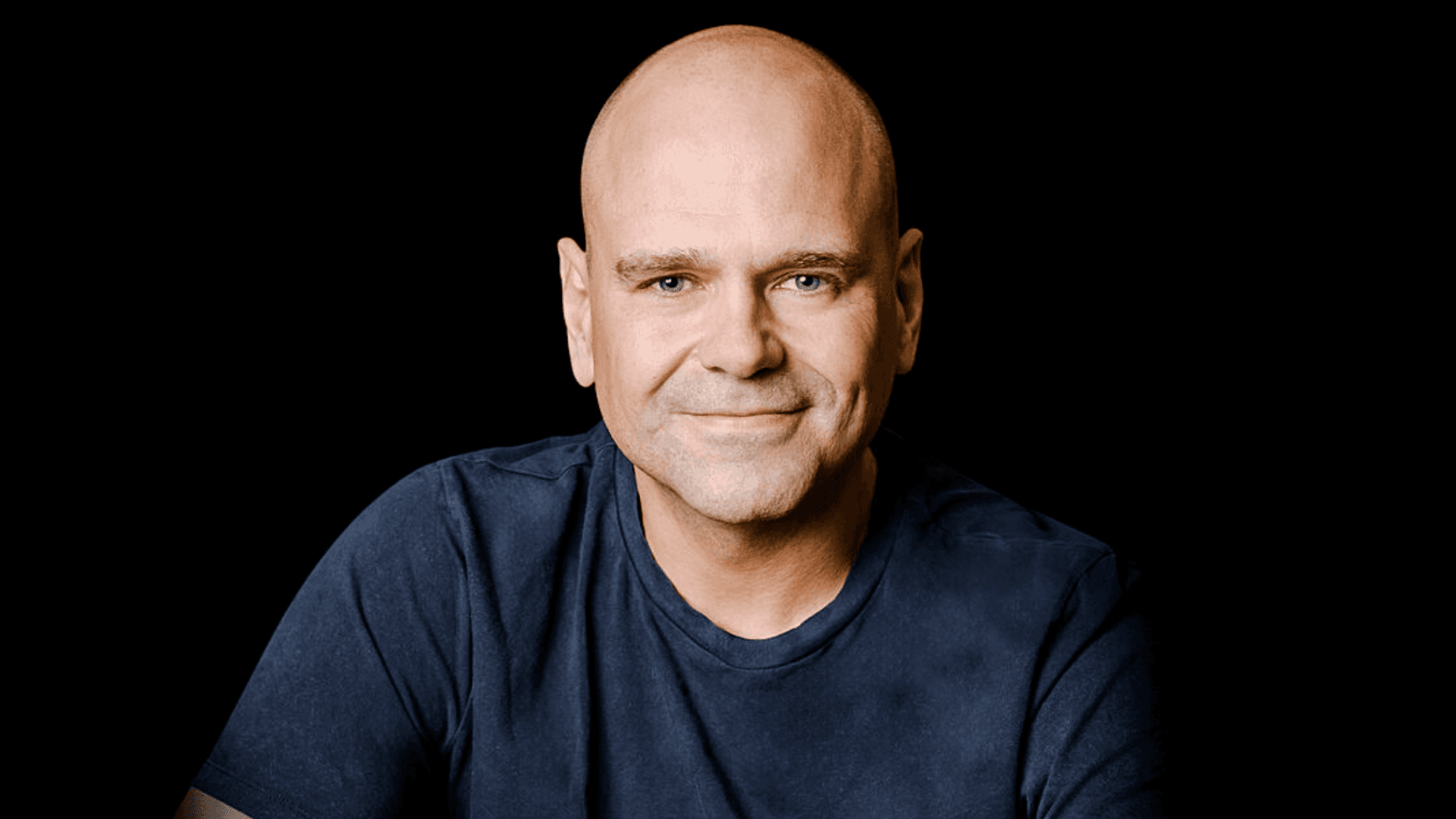
Mark Green's expert methods to improve accountability and productivity


Leadership
Execution
"There's a crisis of accountability in organisations today, a crisis of epidemic proportions." (1)
Why are leaders failing at keeping others accountable?
82% of participants in a workplace accountability survey say they either try but fail or avoid it altogether. (2)
But, as business coach and popular Growth Faculty speaker Mark Green warns, “What you tolerate as a leader establishes the norm for your organisation.”
Mark, a foundation mentor at Growth Faculty's AI Mentor tool, is a global expert on accountability with advice for leadership teams on creating a culture of accountability. In our masterclass on the topic he told us accountability boils down to one question:
'What are the results you are paid to deliver through your role?'
Results you are paid to deliver
In essence, accountability is 'ownership of an outcome' - not just the doing of the task. In this blog we'll explore what Mark means by this, why peer learning and leadership development play a big role, and easy steps for you to create a culture of accountability.
What is a culture of accountability?
Mark says a culture of accountability is about achieving a results-based mindset versus an activity-based mindset across teams at every level of your organisation.
As author of Creating a Culture of Accountability, Mark starts by pointing to the dictionary definition of Accountable: (Merriam-Webster Dictionary Online)
1. Subject to giving an account: answerable
2. Capable of being explained: explainable.
This definition of accountability shows its about people being answerable for the results they are paid to deliver.
Focusing attention on results, not tasks, allows for more flexibility and autonomy from leaders.
In turn, accountability leads to higher engagement and delivers a stronger, higher-performing team.
Free Overview Whitepaper To Download: How to Create a Culture of Accountability
How can you create a culture of accountability?
In business, there's an 'epidemic of letting people off the hook', according to HBR. (3) But a culture of accountability isn't out of reach. It just takes mindfulness, a bit of courage, and Mark Green's accountability lessons.
Mark starts with three building blocks of accountability based around the premise that people like their work to be noticed.
3 building blocks of accountability
Expectation I believe in you.
Context Why this matters (to me and/or to our organisation).
Attention Hey, I'm watching you (but not in a "Big Brother" way - think "I'm invested in this").
As we'll see below, if you expect more of others, they will rise to the occasion. Of course, nobody's perfect but even a 20% improvement in a team member's work makes a big difference over time to the results of a company.
Behaviours that improve or ruin accountability
Rewarding the right behaviours helps to build a culture of accountability. If colleagues and leaders can communicate clearly, show they care, and practise radical candour, it can go a long way to keeping employees engaged and productive.
We know an employee who feels 'engaged and inspired' is 125% more productive than the unsatisfied staffer. (4)
So, work down this list to improve the accountability results in your team.
Hire the right team
Get the right people on board. Leadership author and researcher Jim Collins believes the single most important thing across all aspects of leadership is the principle of first who.
"It is first the right people, right people in the key seats, then drive the bus." - Jim Collins
So, try to fill your organisation with mostly A-players (or impact players as Liz Wiseman calls them) - they will have the right mentality to reinforce responsibility and accountability.
Have high expectations
"What is expected shapes what happens." - Human Psychology website
Mark says it is vital to show you have high expectations of someone, instead of a toleration of mediocrity. Studies have shown that someone's high expectations of us goes a long way to improving our behaviour and our performance.
Communicate clearly (especially when delegating)
it is critical to delegate an outcome, not a task. Use nouns for outcomes, not verbs for tasks to be crystal clear.
Mark counsels leaders to "be transparent in your communications, instead of playing your cards 'close to your chest' (or vest)." Not divulging enough detail doesn't help accountability.
Neither does infrequent communication. Mark has often said that until your team literally rolls their eyes and finishes your sentences for you, you're not repeating yourself enough.
Monitor performance and progress
Be quick to course correct, says Mark. It's more effective than a slow response to change. Accountability is about being proactive, making constant changes and staying on an approximate line, he says.
In fact, Mark told the masterclass that this course correction mindset/action would be the most important pillar for leaders he'd recommend to create a culture of accountability.
That's because accountability only shows up when it's too late to do much about it. The Workplace Accountability Study found 80% of those surveyed said feedback was something that happened to them "only when things go wrong" or "not at all."
Focus on the right things
Look for the answers not the culprit. Mark says when you "take someone to task" it sounds like a blame game. So be clarity-driven instead of doing any finger pointing. In other words, make accountability about being driven to find root causes for issues, and not naming and shaming. This is very important for the team to maintain cohesion.
Plan with discipline
Make a plan. Every project or task benefits from disciplined planning instead of taking action before a plan is in place. Mark says that to hold people accountable, planning is critical so that a time frame for completion is understood and the parameters of the project or task are clear.
Also, plan who is responsible for results. Here's another way to phrase it: Jim Collins says that for every important activity there should be One Person Ultimately Responsible (an O.P.U.R.).
"To increase accountability, ensure people know what they are the OPUR of." - Jim Collins
What are the 3 types of accountability?
A culture of accountability prioritises accountability practices across the whole organisation. There are 3 types of accountability:
1. Role accountability
2. Process Accountability
3. Leading by example

Role accountability
What is expected of me in my role? In a culture of accountability this question can be answered by everyone who holds a role. Mark has a simple tool to help.
- Write on a small card: Job title, KPI (i.e. gross margin as measured in $$) and three most significant outcomes for this role: (i.e. gross margin, customer satisfaction, number of 'A players' on operations team).
Key points to note:
- The card focuses on results, not activities.
- Each card is created by role, not by person.
- The card asks: What is your role funded to deliver? Also, priorities and the #1 KPI.
Cards are shared and discussed as a team and the executive team must be aligned. Remember, there is only one card per role (some staff with multiple roles may hold three cards).
Process accountability
Use design. Don't let people feel like they've been thrown in the deep end. Build accountability elements into your leadership, planning, and execution processes. Mark offers the 5 rules to implement:
1. Single point accountability If more than one is accountable then no-one is. Clarify who is accountable for the result (see O.P.U.R. above).
2. Plans before action Who, what, why, when before you start. Use the question As measured by what? i.e. What does good look like?
3. Transparency Does everyone know what's going on? Even the bad stuff?
4. Communication rhythms Major projects and processes should have their own rhythms, as should your key metrics.
5. Continuous Course Correction Help people to learn to think more steps ahead. And 2nd and 3rd order consequences.
Leading by example
Accountability starts at the top. All eyes are on you all the time and it shows the importance of leadership development. So ask yourself, what are my own deeds, and what behaviours am I tolerating in others that are inconsistent in what I say I want?
For example, if being late to meetings is important to you make sure you are on time. If someone comes in late ask to stay back so you can speak to them after the meeting. Everyone will get the message that lateness is not tolerated.
In his book Creating a Culture of Accountability, Mark asks leaders to agree/disagree with these personal statements:
- I live my own values (If observed for two days, what would others observe)
- I honour my own priorities (Importance of family, exercise etc)
- I am coached/mentored for my own growth (Am I leading by example as to how I am growing myself?).
- I am accountable for my decisions and outcomes (Are you always accountable for your outcomes or do you blame or externalise?).
As Mark says, "I've never seen a business with a sustained growth rate that exceeds the personal growth rate of the people running it.
"And that should give you a really clear idea of what the right order of operations needs to be in leadership."
Summary
Mark says accountability is about taking ownership of what you're personally responsible for in your role.
It's about understanding what outcomes are yours, and yours alone.
Therefore, it is on leaders to make sure every employee has this mindset - a results mindset, knows what their role is, and what the expected outcomes of that role are.
Leaders need to continue to grow and learn, and encourage their teams to do the same.
Learning with Growth Faculty
Want to keep up with the latest ideas and thinking from the brightest minds in the world?
Download our Program. Growth Faculty’s live virtual learning sessions feature some of the world's most influential thought leaders in business and leadership, many of them focusing on AI, change leadership, and adaptable leadership.
Events are added regularly, so keep up to date by signing up for our newsletter and see the benefits of Growth Faculty membership. For company packages, speak to us about Growth Faculty's Business Solutions.
References:
1 & 2. CEO and chief researcher Roger Connors, Workplace Accountability Study, 2021, Partners in Leadership
3. Darren Overfield and Rob Kaiser, 2012, 'One Out of Every Two Managers Is Terrible at Accountability' , HBR
4. Bain & Company, from Instride's 2021 article: '10 Employment Engagement Statistics You Need to Know in 2022.'

Mark Green
Best Selling Author | Business & Leadership Growth Coach
Mark Green is a speaker, author, strategic advisor and business and leadership growth coach to CEOs and executive teams worldwide, specialising in:
- Leadership
- Creating a Culture of Accountability
- Business Growth
He works with CEOs with $50-400 million in revenue who are stuck in the growth trap. Already successful, they are obsessed with creating scale, but cannot predictably generate the financial or quality of life results they want through their organisation.
He is the author of Activators – a CEO’s Guide to Clearer Thinking and Getting Things Done and Creating a Culture of Accountability.
He is a Core Advisor to Gravitas Impact Premium Coaches, a Coach and Mentor to coaches worldwide, and an active contributor to the development of programs and content for the Gravitas Impact / 7 Attributes of Agile Growth™ ecosystem.
Mark has a Bachelor of Arts degree from Washington University, with a major in Psychology and a minor in Business Administration.
Upcoming Learning
Who's Up Next?We're continually sourcing the world's greatest minds for your business success, so subscribe today for event updates, business ideas, leadership tips and tools for growth.
Related Articles