Retention masterclass: Study shows 41% consider leaving their jobs
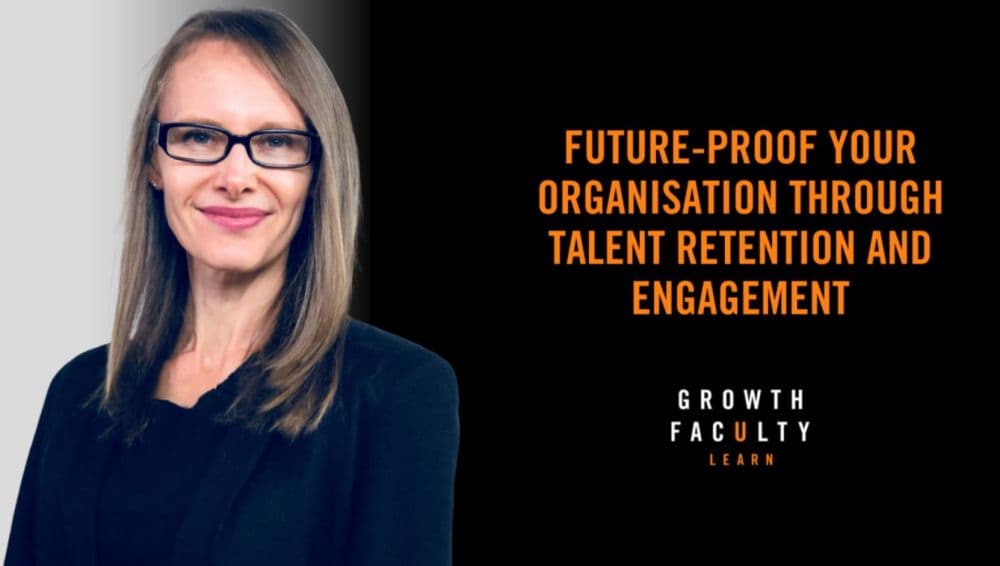
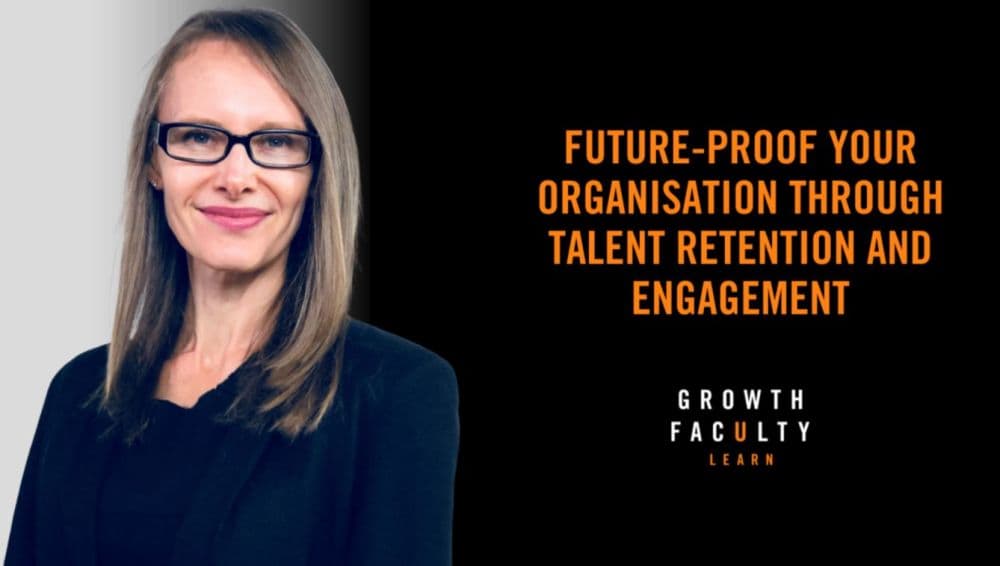
Founder of TalentCode HR Trudy McDonald on proven factors in retention
Jump to section3 actions to retain staffWhy are companies losing staff?Factors driving employee attrition and retentionMoneyPurpose
People
Employers are struggling to attract and retain talent. Some report 40-50% turnover in the last 12 months.
According to a recent McKinsey study 41% of workers are considering leaving their jobs in the next 3 to 6 months.
Managing Director and Founder of TalentCode HR Trudy McDonald told todays masterclass the key to retaining staff is personalising their experience of work.
The least fair thing you can do is treat everyone the same.
Heres a summary of what participants learned at this valuable live virtual event, starting with her 3 recommended actions.
3 actions to retain staff
-
Have different conversations with your people. What do they value? What are their aspirations? Have your leaders and managers get to know them personally.
-
Ask questions about their job : What do you enjoy most about your role? What could we do differently to make this your dream job?
-
Make sure your leaders and managers are holding their people accountable. Setting goals and having check-ins helps with engagement and helps to create a high performance environment.
**** Free Download : 10 Leadership Qualities That Will Help Solve Challenges in 2022
Why are companies losing staff?
Across the globe, people need to be re-engaged with their work. To future-proof your organisation, Trudy says to first consider the many factors at play.
-
****Job ads have hit a record high, organisations are struggling to fill vacancies and retain talent.
-
Covid and flexible work arrangements changed mindsets about what people want from work.
-
This led to the great resignation, the great renegotiation, and quiet quitting.
-
People are moving to non-traditional roles or taking sabbaticals.
-
More people are taking up a tree change and relocating to rural areas.
-
Well-above market salaries are being offered to attract talent.
Quiet quitting is where the 80% of people not engaged at work show up but dont give their all. Trudy says shes heard how people feel they are on a treadmill and lacking purpose.
Im feeling pretty exhausted Ive lost my motivation Im not sure how much longer I can do this.
Factors driving employee attrition and retention
Trudy said she asked an early career doctor what factors would entice her to move jobs (e.g. to a regional hospital).
She said:
I dont want to work where Im made to feel guilty if Im asking to be paid for my overtime. I dont want to go to the executives and have to beg. I also want to feel like I can be a person, like I can leave the office and go down to the bank if I need to.
McKinsey research shows that remuneration is the number one reason that people stay or leave their job. Flexibility, meaningfulness of work (purpose) and development and advancement are also key drivers.
Money
If people perceive that theyre paid fairly we can take money off the table, says Trudy.
How people create their perception of fairness:
-
How much am I paid today vs what I could earn elsewhere. Its important for leaders to do salary benchmarking. Most of us are bombarded with job offers and sky-high salaries we can earn these big figures are not necessarily the norm.
-
They will look at internal equity. People will compare salaries, especially if they perceive they are working harder than others in the same organisation. Trudy: We need to behave as if everyones salaries have been left on the printer.
-
For how hard Im working, do I feel Im being paid enough? This may be total hours worked but could also be a bad manager (i.e. Im not being paid enough to put up with this ).
Takeaways :
When talking about remuneration, emphasise the fairness, not just the amount. If you can afford to pay above market average sing it from the rooftops. When things get tough those whove thrown money around will find it difficult so ideally set pay at market average or just over market average.
Purpose
Individuals want to work for an organisation going somewhere and what that means for them, Trudy told Growth Facultys masterclass.
Have you dusted off that strategic plan? Have you refreshed it and engaged with your team members on where the organisation is going and what it means for them?
-
Why are we getting on the bus? (purpose)
-
Where are we going (BHAG/Vision) What does this mean for me?
-
What is the first stop? (1HAG)
-
What is the next stop? (3HAG)
See our blogs on BHAG and 3HAG Way : 7-STEP STRATEGY FRAMEWORK FOR GROWTH IN 2022 **** and WHY YOU NEED A 3HAG TO REACH YOUR JIM COLLINS BHAG .
Flexibility
Trudy says flexibility is no longer a point of difference and its now the norm for organisations.
Companies are now experimenting with new ways of working.
For example, from next week Unilever will test a four-day working week for its 500 workers in Australia. The trial will run for 12 months, and workers will retain 100% of their pay but reduce their hours to 80% provided they maintain 100% productivity.
According to Trudy. Unilever's meeting time will reduce by 3.5 hours per week, and teams will leverage technology in a more efficient way for communications.
She told the masterclass that research by UTS in NZ has found the four-day working week results in 34% fewer sick days, stress reduced by 33% , work/life conflicts reduced by 67%, and feelings of strength and vigour increased by 15%.
Meanwhile, she says a different evaluation of a six-month pilot programme on a four-day working week for UK organisations found that:
-
88% said the shorter working week was working well
-
46% said productivity had stayed the same
-
34% said productivity had improved slightly
-
15% said productivity had improved significantly
Trudy says the shorter working week is one you could try, but its not necessarily right for every organisation. Thats why you need to establish guardrails.
What works for everyone
Guardrails arre guiding principles that leaders and teams can use to make decisions about ways of working:
-
Does it work for the organisation? Can you be available for our external and internal customers?
-
Does it work for the team? How are we going to communicate, innovate, build each others knowledge?
-
Does it work for the individual? Whats the impact here of this on my team?
Trudy says you then have an opportunity to test it. Lets test it out and review every 3 months
How do you know its working? Define success as a combination of outcomes and behaviours (not are you visible and how many hours are you working). Then you have the criteria to say, youre not delivering on the outcomes, or these behaviours are not right.
Trust and accountability
High performers prefer to work in a high-accountability organisation.
A lot of companies are changing from a manager-employee accountability model, to one of transparency. A transparent workplace is one that promotes trust.
With trust comes vulnerability and with vulnerability comes accountability. Everyone knows what the required outcomes of the team are and where everyone is tracking on their tasks.
Trudy says transparency and team accountability is scalable.
Offering hope to retain exhausted staff
Microsofts Work Trends Index 2022 found 62% of Australian employees were experiencing burnout , compared with the global average of 48%.
No wonder leaders are met with exhaustion when they say Okay lets go again! We need to remobilise!
Trudy says we need to stop, pause, and do a reset.
Acknowledge theyre working hard and that in the new year you will do a reset, she suggests. It will give them hope. Otherwise, they will look for greener pastures elsewhere.
To do a reset:
Go into next year and wipe all calendar clean and start with a clean slate. Could we achieve the outcomes in a different way?
Role Clarity
-
Do we have role clarity and clear measures of success?
-
Where is there waste/where are there inefficiencies?
Accountability
-
How do we hold each other accountable?
-
How do we give and receive feedback?
Meetings
-
Do our meetings have a clear purpose, agenda, and outcome?
-
Who attends our meetings? How long do they last?
Decision making
-
How can we promote dialogue and debate?
-
How do we make decisions?
Mental health and wellbeing
A high performing environment is a balance of challenge and support. Its supportive but not too comfortable, challenging but not too critical and stressful, and, above all, it should not be meaningless.
Trudy says that employees highly value the support. However, since Covid-19 organisations have carried over the huge amounts of support they offer, but get complaints if they try to lift the challenge aspect of the job.
She says It comes back to the reset.
Redefine from January what it needs to be a high performance environment (with the teams involved).
Part of the plan is creating a psychologically safe workplace.
Constructive developmental feedback
And last, but not least, a proven non-financial reward is recognising people through appreciation. This is not about simply giving people praise, its constructive positive feedback , and constructive developmental feedback.
Trudy says companies should upskill leaders and managers on how to offer constructive feedback.
S.B.I. method:
-
Situation what happened, anchored in time and place. Be specific.
-
Behaviour what did you actually do the observable action.
-
Impact on you, others, task or the organisation.
See also our blog: 5 BIGGEST RECRUITMENT CHALLENGES IN 2023 AND HOW TO OVERCOME THEM
Overcome Challenges with our Growth Faculty Pass
With our Growth Faculty Pass , youll learn from the best leadership minds in the world to help you overcome some of the biggest challenges arising in a changing workforce. Get exclusive access to weekly live, interactive and virtual masterclasses to discover how the best leaders are achieving results.
Our authors and speakers include Jim Collins, Liz Wiseman, Stephen Covey, Whitney Johnson and more.
Upcoming Learning
Who's Up Next?We're continually sourcing the world's greatest minds for your business success, so subscribe today for event updates, business ideas, leadership tips and tools for growth.
Related Articles