Session 3: Senior Leadership Program: Customer Focus & Accountability
Summary of Senior Leadership Program with executive coach John Spence


Jump to sectionHow thoroughly do you listen to your customer?Know your buyer personaWho do you compete against?Moments of truthA strategic plan doesn't need to be complex
Marketing
Sales
"Whoever owns the voice of the customer owns the marketplace." - John Spence
When a landscaping business hired executive coach John Spence to help grow their business, he asked them to put their energy into extreme customer focus.
First, he suggested the landscapers ask their 6 top clients (responsible for 35% of their total $70 million revenue) these customer focus questions:
- Why, specifically do you do business with us?
- What are the top 3-4 reasons?
"Congrats! There is your marketing," the author of "Awesomely Simple" told the landscapers. "If your best customers spend money with you for those specific reasons, its likely others will too."
Do those things!
John told this week's Growth Faculty final Senior Leadership masterclass that he also suggested they ask:
- What can we do to make it easier to do business with us?
- What can we do to earn more or all your business?
"DO those things!" John told the landscaping business.
Never do those things!
And, finally, he had them ask:
- What would we have to do for you to fire us straight away?
"NEVER DO those things," said John.
From that day on, the landscaping business built their marketing around "Here are 4 things we do better than everyone else" and they've continued to ask their customers the same customer focus questions every year since. Business is booming.
ACTION STEP: So, why specifically do your customers do business with you? Could you guess at what your best customers might answer, if they were asked this question?
How thoroughly do you listen to your customer?
John Spence says there are many ways to improve your customer focus. Most of them require you to really listen to your customers.
You can do this via surveys and questionnaires, customer interviews, focus groups, social media monitoring, feedback opportunities, customer panels, user activity data analysis, online reviews and ratings, customer support interactions, community forums, net promoter score (NPS) -direct observation, or a customer advisory board.
ACTION STEP : List out how many of the listening to customer initiatives (above) are activated in your company.
Know your buyer persona
The masterclass learned that marketing is primarily about data, and that if you really want to understand your customer it helps to do a "buyer persona."
According to Hootsuite, a buyer persona is a detailed description of someone who represents your target audience. This persona is fictional but based on deep research of your existing or desired audience.
ACTION STEP: Write down your buyer persona's role, psychographics (values, attitudes, lifestyle), internal concerns, budget and approval constraints, decision criteria, pain points, common objections, goals and success measures, company profile.
Who do you compete against?
When considering extreme customer focus, John says you need to understand that you don't just compete against the other people in your industry, you also compete with all the substitutes.
John says that we all now compete against substitute competitors like Amazon (or any other good customer service business) because customers now demand: "Why can't I get this when I want it, and at the best possible price?" or Google and ChatGPT who offer instant answers.
ACTION STEP : List out your 3 direct competitor businesses and try to list another 4-5 who are substitutes.
Moments of truth
"Moments of Truth" was the English translation of a book written by Swedish businessman Jan Karlsson, former CEO of Scandinavian Airlines (SAS Group).
According to Wikipedia, Jan revolutionised the airline industry through an unrelenting focus on customer service quality.
One of Jan's enduring concepts was that "touch points" between a customer and the company could be deemed moments of truth - and he claimed there were 50,000 of them every day in his airline.
John Spence says all organisations have about three or four critical moments of truth that have the power to turn customers into either customer evangelists or customer "terrorists"!
He says for restaurants there might be 170 touch points (car parking is easy or hard, music too low or too loud, chairs too hard or too soft) but 4 critical moments of truth things that they must do flawlessly to keep customers happy and coming back:
- Good service
- Good quality food
- Fair prices
- Cleanliness
If any one of these things are not present in a restaurant, you lose customers and get poor reviews (no matter how good the parking or music was!).
ACTION STEP : Write down 5 touch points for your organisation, and the 3 critical moments of truth. Make sure you deliver your moments of truth flawlessly.
Have a process to deliver those moments of truth, but empower employees to personalise the experience.
Consider also, who creates the first impression of your company? It might be your lowest paid, least-trained team member. Who interacts with your customer the most? They need to understand your moments of truth and be a living example of your brand/product.
Recommended reading
John has recommended the books:
"Spin Selling" by Neil Rakham (S.P.I.N. stands for situation, problem, implications, customer needs)
And "Let’s Get Real or Let’s Not Play" by Mahan Kahlsa
The 5 keys of referability
“You need to be greedy – greedy, greedy, greedy to help your customer, to serve them as much as you can and be a trusted advisor.” - John Spence
To finish up the segment on extreme customer focus, John Spence listed out the 5 keys of referability:
1. Show up on time
2. Do what you say you will do (keep your promise)
3. Finish what you start
4. Always say please and thank you (be polite and professional)
5. Always give a little more than they expect (i.e. the 13th muffin/doughnut in the dozen)
He says that if an organisation was able to do those 5 things consistently, they would crush the competition.
ACTION STEP : What's one thing (a "wow" moment) you can commit to doing?
A strategic plan doesn't need to be complex
Moving to the topics of execution and accountability, John explained that complexity kills a strategic plan.
He also emphasised that strategy is just a guess and was quick to debunk some myths around strategy.
"You don't have to be #1, it doesn't have to be new and exciting, and you don't have to be better at everything. Just get parity across almost everything."
He says that you DO have to figure out what to say "no" to, because strategy is the allocation of scarce resources, and you should only change your strategy when the market demands it.
Value Differentiation x Disciplined Execution
What is your value differentiation? Does your product/brand/service differentiate in ways that:
- Is unique and compelling?
- Your target customer values it very highly?
- Is difficult, if not impossible, to copy? (consider your people, culture, customer relationships, brand, data)
- You can consistently execute it with excellence?
Checklist: 6 keys to accountability
When creating a culture of accountability, John says that clarity in communication and collaboration are vital.
He has this checklist for keeping people accountable:
- 100% clarity + appropriate authority and resources (in detail explain what success looks like, due dates, KPIs, hurdles that have to be met, and what they need to achieve success).
- 100% agreement. (John gets that person to write a memo back with their understanding of what he's told them, with details. This is called an accountability agreement).
- Track and post. Track the progress and post it so they can see it, so its highly visible. (Green, yellow, red flags to indicate if on track).
- Coach, mentor, train, and support.
- Celebrate success.
- Refuse to tolerate mediocrity.
Refuse to tolerate mediocrity
When faced with a direct report who consistently fails to do satisfactory work, try John Spence's 4 pieces of paper method. Instead of telling the employee what to do, ask them to fill out four pieces of paper.
- What you will do in the 30, 60, 90 days to show me that you should stay on the team? John says he likes it to be binary, no ambiguity
- What do you need from me as your manager to make that happen?
- What is a small reward you'd like if you deliver everything you deliver everything on paper number 1?
- What should the ramifications be if I give you everything you ask for and you don't deliver?
Purpose-driven leadership
John shared 4 pillars of purpose-driven leadership.
· Integrity and strong ethical standards
· Mission alignment
· Transparency and open communication
· Empathy and emotional intelligence
Outperforming industry peers
What management techniques really work to improve business performance?
Organisational excellence rests on five drivers:
- purpose-centered leadership that inspires and aligns
- people-first culture investing in growth and well-being
- customer-centric strategy building trusted partnerships
- focused innovation balancing core strengths with adaptability
- operational simplicity enabling fast, disciplined execution through clear roles and streamlined workflows
This fits with John Spence's proprietary formula for business excellence:
- (Talent + Culture + Extreme Customer Focus) x Disciplined Execution = Business Excellence.
Learning with Growth Faculty
If you’re committed to fostering a high-performance environment, consider joining the Growth Faculty.
Our membership offers access to the world's brightest thinkers plus replays, resources and insights to help you lead with clarity and purpose.
John Spence
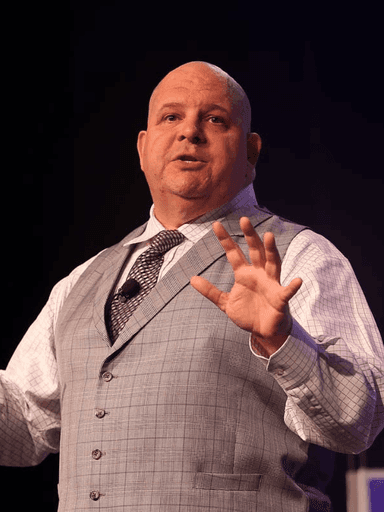
John Spence is recognised as one of the top leadership development experts in the world. In 2023 he was named in the Top 50 Global Thought Leaders and Influencers for both Coaching and Culture (Thinkers360) and was once named one of America’s Top 50 Leaders to Watch by the American Management Association alongside Sergey Brin and Larry Page of Google and Jeff Bezos of Amazon.
John consults to and coaches organisations at all levels on advanced leadership, high-performance teams, strategic thinking, business excellence and superior customer service. John has guest lectured at more than 90 colleges and universities, including MIT, Stanford, Cornell, and the Wharton School of Business.
John has also been the owner or CEO of five companies and currently serves as a board member or adviser to several organisations. He is the author of “Awesomely Simple: Essential Business Strategies for Turning Ideas into Action.”
Let’s talk about:
- Foundations of business excellence
- Strategy that works
- Characteristics of outstanding leadership
Upcoming Learning
Who's Up Next?We're continually sourcing the world's greatest minds for your business success, so subscribe today for event updates, business ideas, leadership tips and tools for growth.
Related Articles