John Spence's 5 key pillars of better strategic thinking
Masterclass explores ways to build a strategy for growth
Jump to sectionAsk your most engaged customers: Why specifically do you do business with us? What are the top 3 to 4 reasons?How to be a more strategic thinker5 levels (or pillars) of strategic thinking1.Business Acumen2.Personal Experience
Strategy
29% of our John Spence masterclass participants admitted they didn't have, or weren't sure they had, a vivid, compelling, and well-communicated vision and strategy for growth. So, if you take one action to improve strategy in your company, make it this.
Ask your most engaged customers: Why specifically do you do business with us? What are the top 3 to 4 reasons?
John says that with this information you can begin to shape your strategy: Where to place the bulk of your focus, discipline, and action.
19% of our masterclass participants admitted they didn't do, or weren't sure they did, an excellent job of listening to our customers. Only 16% strongly felt they did do an excellent job.
How to be a more strategic thinker
Strategy is largely about valued differentiation says John Spence, leading Growth Faculty's masterclass on How To Be A More Strategic Thinker. Your customer's decision-making process is a bit like Hogwarts sorting hat, he says, in that it's sorting products and services based on how unique and compelling they are, how highly they value them, and how well you deliver them.
Your job is to find out what your customer values highly, and consistently execute it with excellence, says John.
This calls for John's frameworks for better strategic thinking.
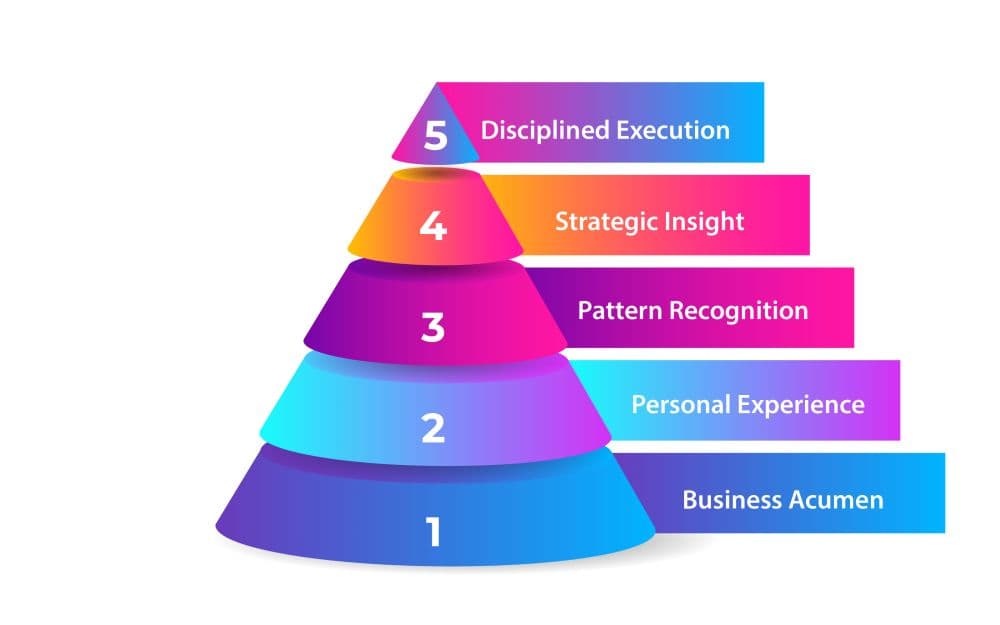
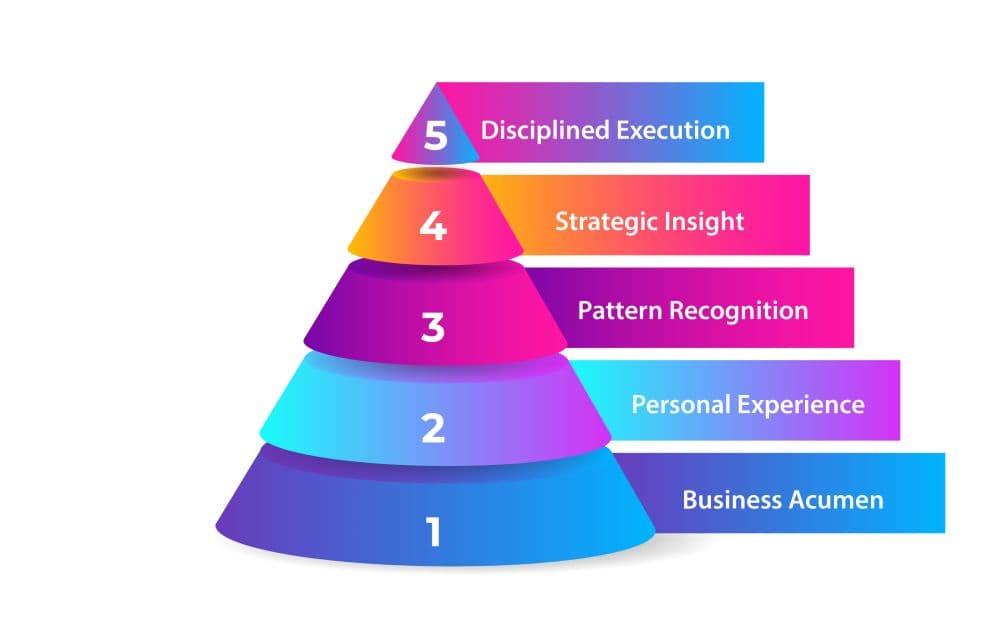
5 levels (or pillars) of strategic thinking
1.Business Acumen
Being business savvy is a key skill for strategic thinking. Yet the average businessperson reads only a half a self-learning type of book a year, claims John. If you were to read one book every other month (6 books a year) you'd be in the top 1% of the country you live in.
If you read one book a month, you'd be in the top 1% in the world for self-learning, he says.
And, if you got your team to read books (or take masterclasses or equivalent) you'd see a huge impact on levels of business acumen.
2.Personal Experience
What you bring to the table - all your experience and knowledge - is added to the information you've read (or watched/listened to), the active learning you've done, and any data you can gather.
3.Pattern Recognition
As you build up your learning and experience you begin to recognise patterns. This feeds into your AQ or adaptability quotient (sometimes known as agility quotient).
Strategic thinking goes hand in hand with organisational adaptability, which calls for PASSION, PERSISTANCE, PRACTICE, and PATTERN RECOGNITION, according to The Cambridge Handbook of Expertise and Expert Performance.
4.Strategic Insight
Strategy is an allocation of 3 scarce resources: time, money, and people. Of the three, time is the most precious so a strong strategic thinker is always asking "What we will spend time on?" and "What do I need to say no to?" Another question is to tap into the power of 'unlearning' by asking is "What do I need to unlearn?" John shared that he needed to 'unlearn' not to trust his intuition.
5.Disciplined execution
John's formula for business excellence looks like this:
Talent + Culture + Extreme Customer Focus x Disciplined Execution = Business Excellence.
He suggests companies home in on 3-4 things they must do flawlessly, and calls these the Moments of Truth. For example, a restaurant MUST have great service, great food, fair value pricing, and cleanliness.
John's 5 Keys to Accountability
Ignorance, inconsistency, indifference , and inflexibility are signs of poor leadership and should signal alarm bells to company executives. But, insistence on accountability is a sign of excellent leadership, so use this framework in your strategic thinking to ensure your people are executing on tasks and goals.
- 100% clarity and appropriate authority and resources
- 100% agreement (I accept this is a reasonable goal, and agree on taking accountability for this)
- Track and post (use the traffic light system green to red)
- Coach, mentor, train, and support. Step in if someone is slipping from green to yellow
- Celebrate success refuse to tolerate mediocrity
Do Something Great
You need value differentiation and disciplined execution to build a successful strategy. So, again, what does valued differentiation look like?
- Unique and compelling
- Your target customer values it highly
- Difficult if not impossible to copy
- You can consistently execute it with excellence
But that doesn't mean you have to be better on everything.
If you have parity of 80% to 90% with your competition, add a few things where you have a superior offering, he says.
Hard To Copy Diffentiators
To do something great try competing on these hard-to-copy differentiators:
- Top talent - very tough to copy great people
- Winning culture - hard for the competition to steal your people
- Customer relationship - know the wants, needs, and desires of your best customers
- Data - this is a goldmine and is a defendable differentiator
- Brand - hard to steal away. Tip: A brand-hijack tacks a lesser-known brand to a known one
John's Conversation Starter Questions for Teams
What do we do that meets the four criteria of an effective strategy?
- Unique and compelling
- Highly valuable to our target customers
- Difficult if not impossible to copy
- We can consistently execute it with excellence
- What are our moments of truth? (3-4 things we must do flawlessly)
- What sort of training and processes should we have in place for each moment of truth?
- What do we need to do to increase the level of accountability in our organisation
- What would an "ideal team member" look like for our organisation? The answer to this question should be used for hiring, training, promotion, and termination.
- What do you think your customers will answer when you ask them why, specifically, they do business with you
- What would you like your customers to say about your business? Write this out exactly as you would like them to respond. Are you doing the things necessary to get them to say that?
John Spence
John Spence is recognised as one of the top leadership development experts in the world. In 2023 he was named in the Top 50 Global Thought Leaders and Influencers for both Coaching and Culture (Thinkers360) and was once named one of America’s Top 50 Leaders to Watch by the American Management Association alongside Sergey Brin and Larry Page of Google and Jeff Bezos of Amazon.
John consults to and coaches organisations at all levels on advanced leadership, high-performance teams, strategic thinking, business excellence and superior customer service. John has guest lectured at more than 90 colleges and universities, including MIT, Stanford, Cornell, and the Wharton School of Business.
John has also been the owner or CEO of five companies and currently serves as a board member or adviser to several organisations. He is the author of “Awesomely Simple: Essential Business Strategies for Turning Ideas into Action.”
Let’s talk about:
- Foundations of business excellence
- Strategy that works
- Characteristics of outstanding leadership
Upcoming Learning
Who's Up Next?We're continually sourcing the world's greatest minds for your business success, so subscribe today for event updates, business ideas, leadership tips and tools for growth.
Related Articles